






AI safety and research leadership experience to guide the institute’s next phase of growth and advance practical solutions to emerging digital risks , /PRNewswire/ — UL Research Institutes today announced that Kevin Dixon, Ph.D., a recognized leader in AI safety, has been appointed vice president and executive director of its Digital Safety Research Institute. Dixon […]
AI safety and research leadership experience to guide the institute’s next phase of growth and advance practical solutions to emerging digital risks
, /PRNewswire/ — UL Research Institutes today announced that Kevin Dixon, Ph.D., a recognized leader in AI safety, has been appointed vice president and executive director of its Digital Safety Research Institute. Dixon succeeds Jill Crisman, Ph.D., who will continue supporting UL Research Institutes as vice president and distinguished technical advisor.
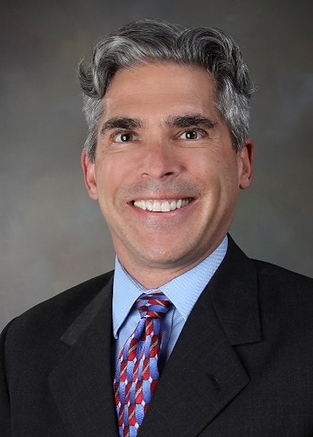
Dixon joins UL Research Institutes from Sandia National Laboratories, where he had served since 2021 as director of the Artificial Intelligence Mission Center, a multidisciplinary research and development organization of more than 200 scientists, engineers, and technical professionals. The center developed and deployed capabilities for high-consequence operational missions in AI security, generative AI for national security, human-systems integration, transformative analytics, and statistical sciences.
“Dr. Dixon brings an exceptional combination of scientific expertise, organizational leadership, and a proven ability to translate research into real-world impact,” said James J. Hudgens, Ph.D., president and chief executive officer of UL Research Institutes. “As digital technologies continue to evolve at unprecedented speed, his experience building research organizations and advancing the practical application of artificial intelligence will help strengthen our leadership in safety science and position the institute for its next phase of growth.”
Dixon co-created Cognitive Foundry, an open-source machine learning library adopted by Netflix, IBM Watson, and other industry organizations. He also helped develop and advance the U.S. Department of Energy’s Genesis Mission initiative.
Dixon is also recognized for his ability to build and scale research organizations. During his tenure at Sandia, he founded and led three research organizations focused on artificial intelligence, machine learning, advanced analytics, and cybersecurity. As the founding chair of Sandia’s AI Board of Directors, he provided enterprise-wide leadership on AI strategy, policy, talent development, and infrastructure.
“Safety challenges associated with digital technologies are among the most complex and consequential issues facing society today,” said Dixon. “UL Research Institutes has built a strong reputation for applying rigorous science to address emerging risks and improve public safety. I am honored to join this organization and look forward to working alongside its talented researchers, engineers, and partners to advance trustworthy, impactful solutions.”
Dixon earned both his bachelor’s degree and Ph.D. in electrical and computer engineering from Carnegie Mellon University. His professional recognitions include the DARPA Outstanding Service Award and an R&D 100 Award as co-inventor of SWiCK Zoom. He is the author of more than 40 scholarly publications and holds five issued patents.
About the Digital Safety Research Institute
The Digital Safety Research Institute, part of UL Research Institutes, helps prevent harm and save lives through independent AI safety research, engineering, testing, and evaluation. Its work addresses critical digital safety issues — including artificial intelligence, synthetic media, cybersecurity, and the societal impacts of emerging technologies — to help make the public safer.
About UL Research Institutes
UL Research Institutes is a nonprofit research organization dedicated to advancing public safety through safety science. Building on the UL legacy of working for a safer world since 1894, UL Research Institutes conducts rigorous, independent research, drawing on expertise across fire safety, electrochemical safety, chemical insights, materials discovery, digital safety, and research experiences and education, to prevent harm and save lives. UL Research Institutes publishes its findings openly and works to guide standards bodies, policymakers, and communities in translating scientific insight into decisions, behaviors, standards, and systems that protect infrastructure and people.
SOURCE UL Research Institutes