




Four key members of a ransomware group that took more than $40.5 million from at least 28 companies have been detained in Ukraine. The group’s members posed as IT support staff on phone calls to break into corporate networks, according to Ukraine’s National Police. The arrests followed an investigation that Ukrainian police ran with the […]
Four key members of a ransomware group that took more than $40.5 million from at least 28 companies have been detained in Ukraine.

The group’s members posed as IT support staff on phone calls to break into corporate networks, according to Ukraine’s National Police. The arrests followed an investigation that Ukrainian police ran with the FBI for more than two years.
A phone call to get in
Before making contact, the group studied each target’s finances, assets and employees, along with weak spots in its IT systems.
“They called company employees and posed as IT support specialists. Under the pretext of technical help, they persuaded them to hand over login credentials or install remote access software. This is how they gained access to the corporate network,” Maksym Tsutskiridze, acting head of the National Police, told Censor.NET in an interview.
One member would keep an employee on the line while another broke into the company’s systems, and the call ended only once the intrusion was confirmed.
“They created their own platform with AI-generated voice messages,” Tsutskiridze noted.
After getting into a network, the attackers stole confidential data, encrypted files with ransomware and blocked company operations.
“The company was cut off from its own data, and then they demanded millions to decrypt it. At the same time, they threatened to publish the stolen information,” he explained. “Victims were pressured from both sides and forced to pay the ransom in cryptocurrency.”
$5 million from one US company
Oil and gas, pharmaceutical, industrial and logistics companies were on the target list, together with financial institutions and infrastructure facilities.
Tsutskiridze described one attack in detail. “From the American company, the attackers stole 1.4 terabytes of data. Initially, they demanded $10 million. After negotiations, they received five million.” The group then spread the attack to other companies in the same corporate group.
“We have identified at least 28 companies that transferred over $40.5 million in ransom to the hackers,” he told the outlet, putting the sum at about UAH 1.8 billion. “That money has already been paid. We are still establishing the final amount of damages.”
Ex-Conti members among suspects
The group had at least 27 members from several countries, including Ukraine, Kazakhstan and Russia. It belonged to a wider criminal structure of more than 60 people in eight jurisdictions, and some of its members previously took part in the Conti hacking group.
Conti emerged in 2020 and became one of the world’s most active ransomware operations, targeting healthcare organizations, government agencies, educational institutions and businesses. Although the group ceased operating under its original name in 2022, researchers believe former members moved into other ransomware and cybercrime operations.
Officers from the Cyber Police Department and the Main Investigative Directorate carried out 66 simultaneous searches in Kyiv and 11 regions of Ukraine, under the procedural guidance of the Prosecutor General’s Office.
US law enforcement officers took part in the raids, and special units, including Kyiv’s TacTeam, provided support. Police seized computer equipment, phones, bank cards, nearly $370,000 and €20,000 in cash.
“Four key members of the group have been notified of suspicion. All four are in custody,” Tsutskiridze confirmed.
The suspects are charged with participation in a criminal organization and unauthorized interference with information systems, which carries a sentence of up to 15 years in prison.
“We continue to identify other members of the international network and their involvement in the attacks,” he added.
Scattered Spider hacker gets six years
In a separate case, US District Judge John W. Holcomb on Tuesday sentenced Tyler Robert Buchanan, a 24-year-old from Dundee, Scotland, to 72 months in federal prison, the US Attorney’s Office for the Central District of California announced.
Buchanan, who is tied to the Scattered Spider group, pleaded guilty in April to one count of conspiracy to commit wire fraud and one count of aggravated identity theft. He and his co-conspirators sent hundreds of SMS phishing messages to employees’ phones, posing as the victim companies or their IT and BPO suppliers.
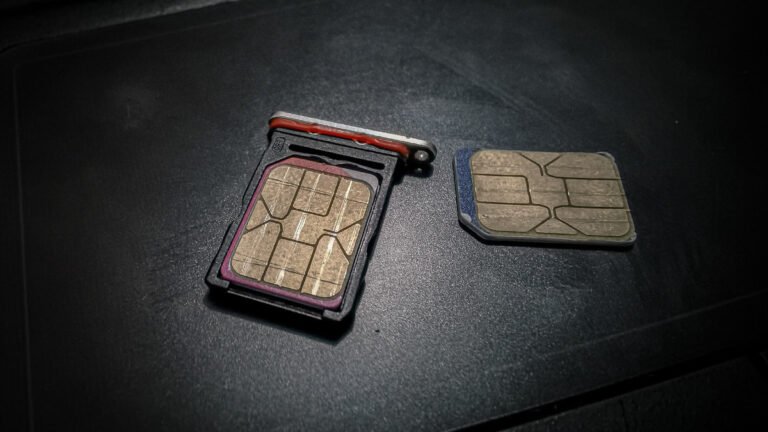
The links led to phishing sites that harvested usernames and passwords and sent them to a Telegram channel run by Buchanan and a co-conspirator. They used the stolen credentials to get into company systems, and SIM-swapped victims’ phone numbers to get around two-factor authentication and reach their crypto accounts and wallets.
The group stole at least $11.6 million in virtual currency from individual victims. “Those thefts had severe, life-altering consequences for many victims,” prosecutors wrote in their sentencing memorandum.
Buchanan, who has been in federal custody since April 2025, is the fifth and final defendant sentenced in the case.