




AI can help you send more job applications. But when you lose track of where you’ve applied, a fake recruiter’s message can start to look like the reply you’ve been waiting for. Job hunting can feel like shouting into the void. You send applications, rewrite cover letters, and wait for replies that may never arrive. […]
AI can help you send more job applications. But when you lose track of where you’ve applied, a fake recruiter’s message can start to look like the reply you’ve been waiting for.
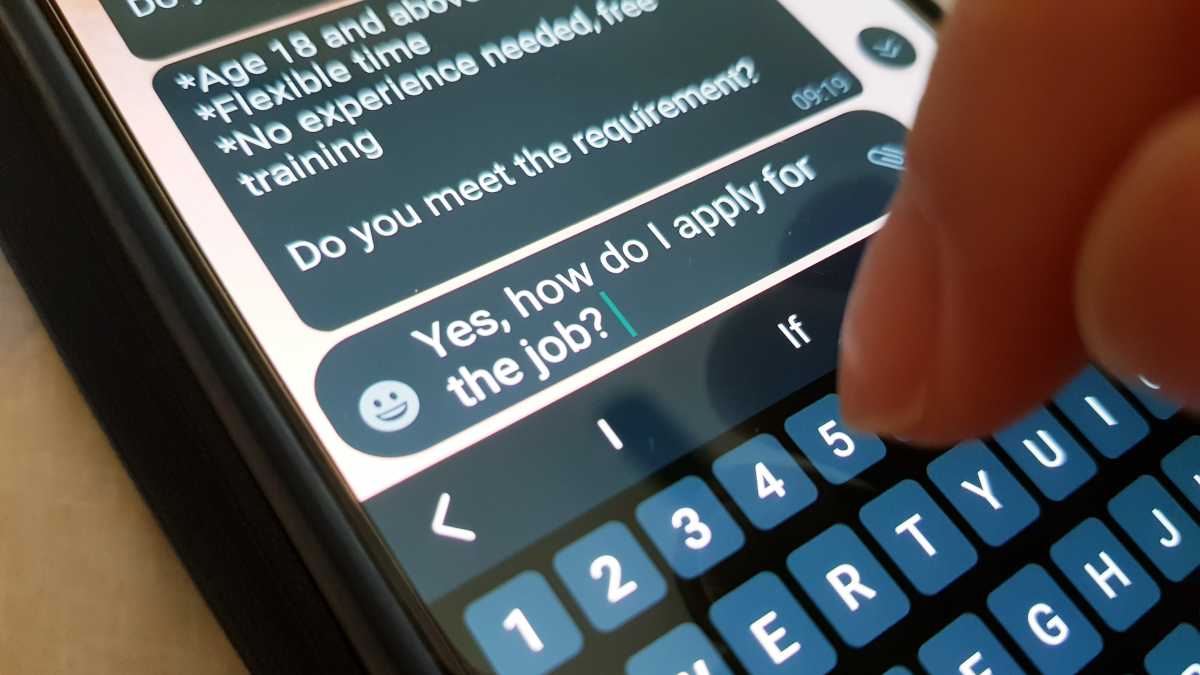
Job hunting can feel like shouting into the void. You send applications, rewrite cover letters, and wait for replies that may never arrive. Then a message lands on your phone: someone wants to talk about a job.
But was it one of the jobs you applied for? It is hard to keep track when you’ve sent out a lot of them.
Two reports highlight an uncomfortable overlap. The BBC describes jobseekers using AI to apply for large numbers of roles, a strategy known as “spray and pray.” Meanwhile, research reported by The Independent suggests many young adults are receiving unsolicited job offers and worry that ignoring those offers could mean missing a real opportunity.
Neither report establishes that mass applications cause people to fall for recruitment scams. But together, they point to a useful security question: When you’re expecting replies from practically everywhere, how do you recognize a message from someone you never contacted?
The scams
Job offer scams come in different forms. We’ve talked about fake interview apps that are spyware, Calendly interview invites that steal social media credentials, so-called parcel expert jobs, advance fee scams, task scams, and recruiters stealing Google credentials.
There are many more, unfortunately. These examples illustrate some of the risks of a bogus recruitment approach: financial fraud, malware installation, and account theft.

Scam or legit? Scam Guard knows.
An anonymized message submitted to Scam Guard, which appears to falsely claim to be from legitimate UK marketing firm The Goat Agency, showed signs of a possible task scam:
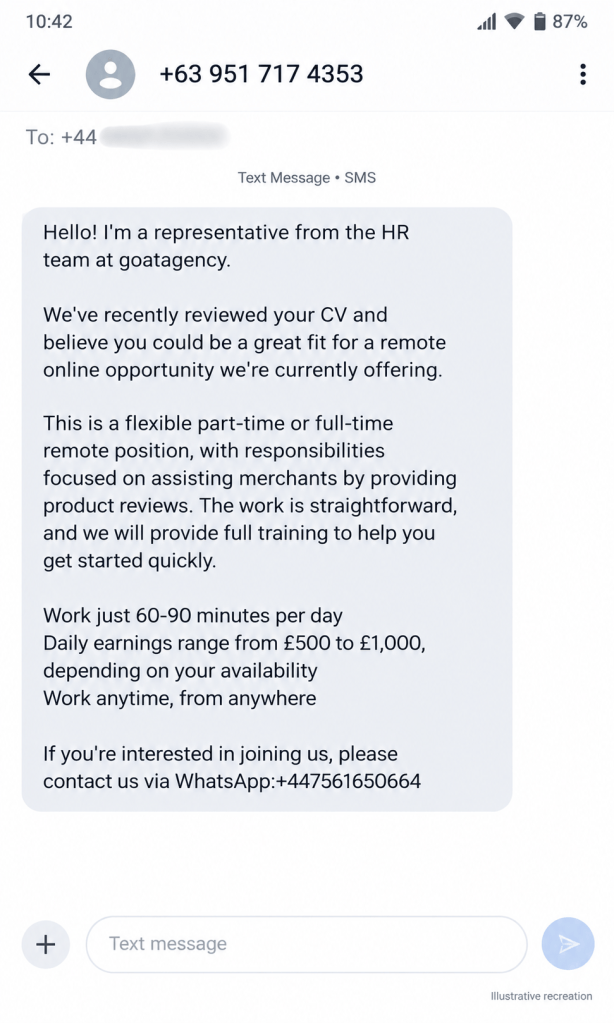
“Hello! I’m a representative from the HR team at goatagency. We’ve recently reviewed your CV and believe you could be a great fit for a remote online opportunity we’re currently offering. This is a flexible part-time or full-time remote position, with responsibilities focused on assisting merchants by providing product reviews. The work is straightforward, and we will provide full training to help you get started quickly. Work just 60-90 minutes per day Daily earnings range from £500 to £1,000, depending on your availability Work anytime, from anywhere If you’re interested in joining us, please contact us via WhatsApp:”
But scammers don’t even need to offer a dream salary. Almost half of UK 18- to 24-year-olds surveyed in research commissioned by Virgin Media O2 said they had received messages offering jobs they had never applied for. Without the obvious red flag of an “easy cash” promise, a scam message can look even more like a legitimate contact from a recruitment agency.
The approach can also start with a phone call. The Independent reports warnings about automated calls asking recipients to add a number on WhatsApp, sometimes in connection with supposed part-time work.
Other approaches use a familiar employer’s name to make requests look credible. We previously reported on fraudulent job postings that imitate real businesses and seek applicants’ personal information or money, including supposed payments for office equipment.
How to stay safe
One simple rule can spare a lot of harm: Keep the applications and verify anyone who contacts you about a job. You don’t need to abandon AI-assisted applications or assume every recruiter is fake, but a plausible opportunity still needs checking
- Keep a simple application log. Record the employer, role, application date, and original listing so you can check when someone contacts you.
- Verify both the vacancy and the recruiter independently. Find the employer’s website yourself and use its published contact details. The existence of a real vacancy doesn’t prove the person messaging you represents that employer.
- A familiar logo doesn’t prove anything. Scammers imitate legitimate companies and may use real employees’ details to support the impersonation.
- Never pay to unlock earnings. A request to deposit money before you can withdraw supposed commissions is a hallmark of a task scam.
- Pause before sharing sensitive information, installing software, or signing in through a recruitment link. Verify the approach first, especially if it arrives unexpectedly.
- Enable multi-factor authentication on your important accounts to make them harder to take over, even if someone steals your password.
- Use up-to-date anti-malware protection with real-time scanning to help detect and block malicious downloads.
An application log can help you check whether a message relates to a job you applied for. Even when it does, verify who’s on the other end before sharing information or taking the next step.
From reporting threats to removing them.
Cybersecurity risks should never spread beyond a headline. Keep threats off your devices by downloading Malwarebytes today.
About the author
Was a Microsoft MVP in consumer security for 12 years running. Can speak four languages. Smells of rich mahogany and leather-bound books.