

An AI SOC that starts with somebody else’s alert is already too late. Stellar Cyber collects and normalizes telemetry, detects suspicious activity, correlates evidence, builds cases, investigates incidents, triages findings, and drives response from the same security architecture. That gives people and AI access to the evidence behind the alert – not just the alert […]
An AI SOC that starts with somebody else’s alert is already too late.
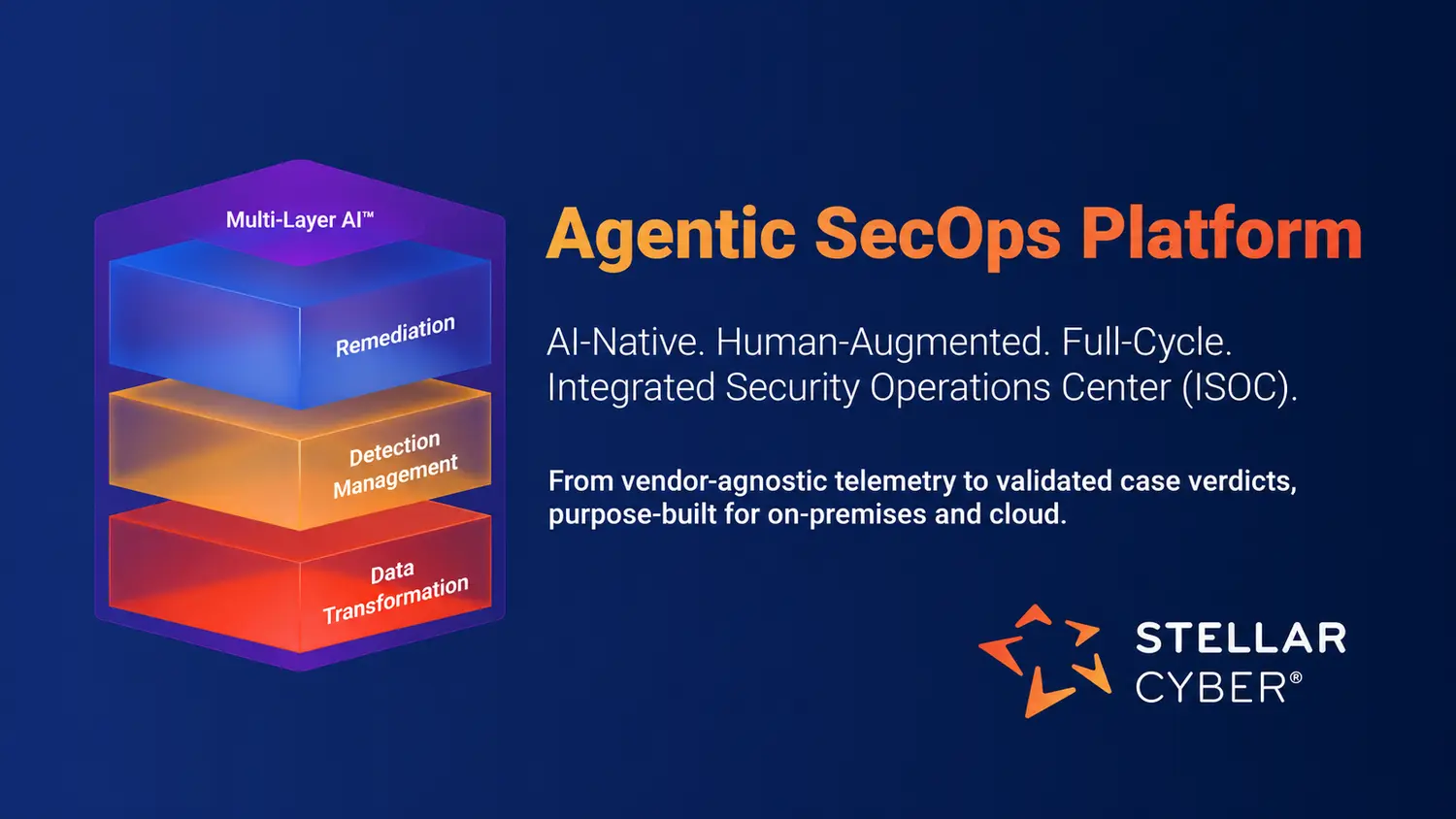
Stellar Cyber collects and normalizes telemetry, detects suspicious activity, correlates evidence, builds cases, investigates incidents, triages findings, and drives response from the same security architecture. That gives people and AI access to the evidence behind the alert – not just the alert itself.
Full-cycle security operations means the data, detections, context, investigation, decisions, and response remain connected as an incident moves through the SOC.
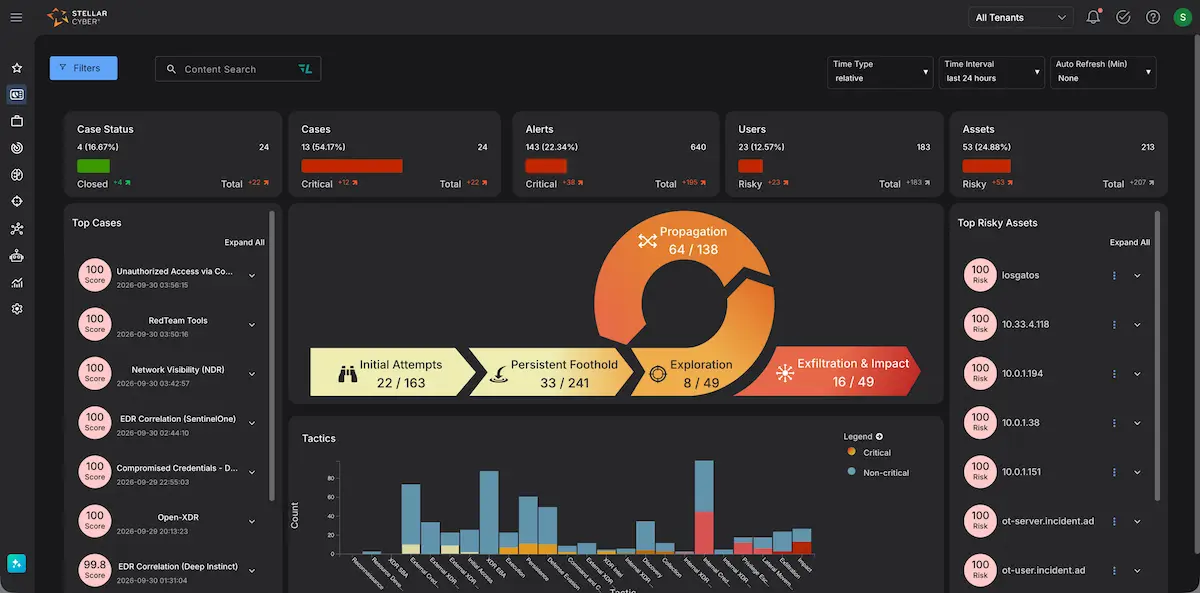
Collect > Detect > Correlate > Investigate > Triage > Act > Learn
Use the right AI for the right problem
Agentic AI is powerful, but agents are only one part of the picture. Stellar Cyber applies different forms of AI strategically:
- Machine learning – detect anomalies and suspicious behavior.
- GraphML – connect users, assets, alerts, behaviors, and attack paths.
- LLMs – investigate, summarize, and explain security context.
- Agentic AI – triage, hunt, orchestrate, and act within defined boundaries.
All four operate against the same correlated security data and case model. AI is an essential part of the security operating architecture, not another assistant sitting above an alert queue.
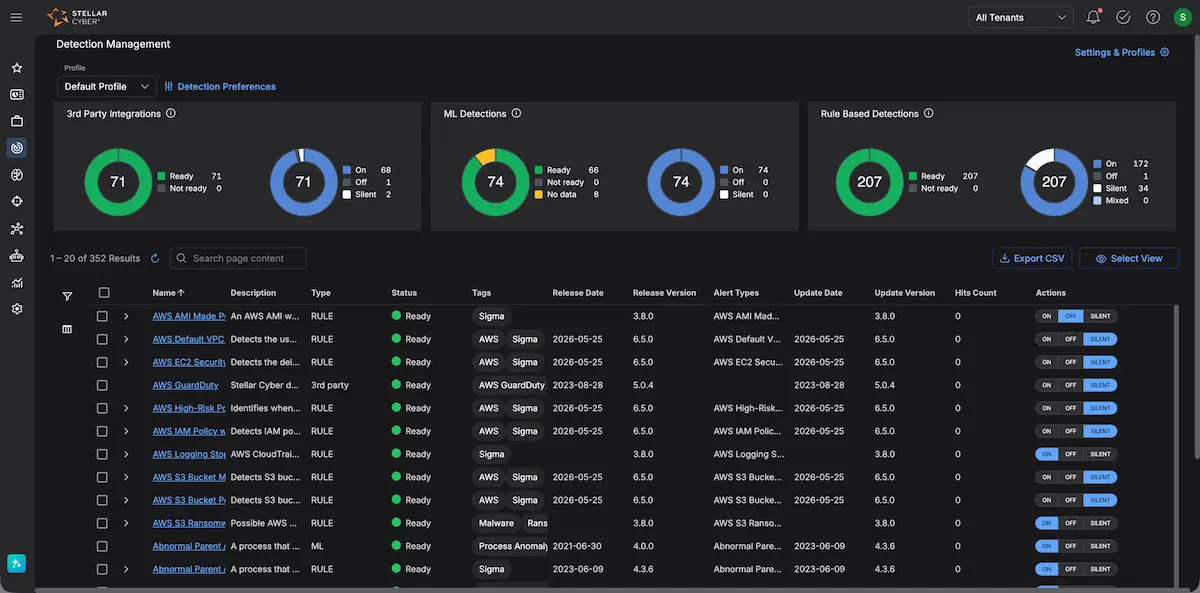
Govern AI at the data boundary
As LLMs and autonomous agents gain access to more security data and more response actions, governance becomes part of the security architecture itself.
Stellar Cyber’s multi-tenant architecture creates explicit boundaries around data, users, policies, permissions, workflows, and actions. That matters well beyond MSSPs.
- For an enterprise, a tenant can represent a business unit, subsidiary, geography, operating environment, or regulated data domain.
- For an MSSP or MDR, a tenant can represent a customer with its own data, policies, controls, and service model.
The principle is the same: centralize operations without collapsing the boundaries that protect data and govern access.
Multi-tenancy is an essential governance model for deciding which people and which AI agents can see which data, use which context, and take which actions.
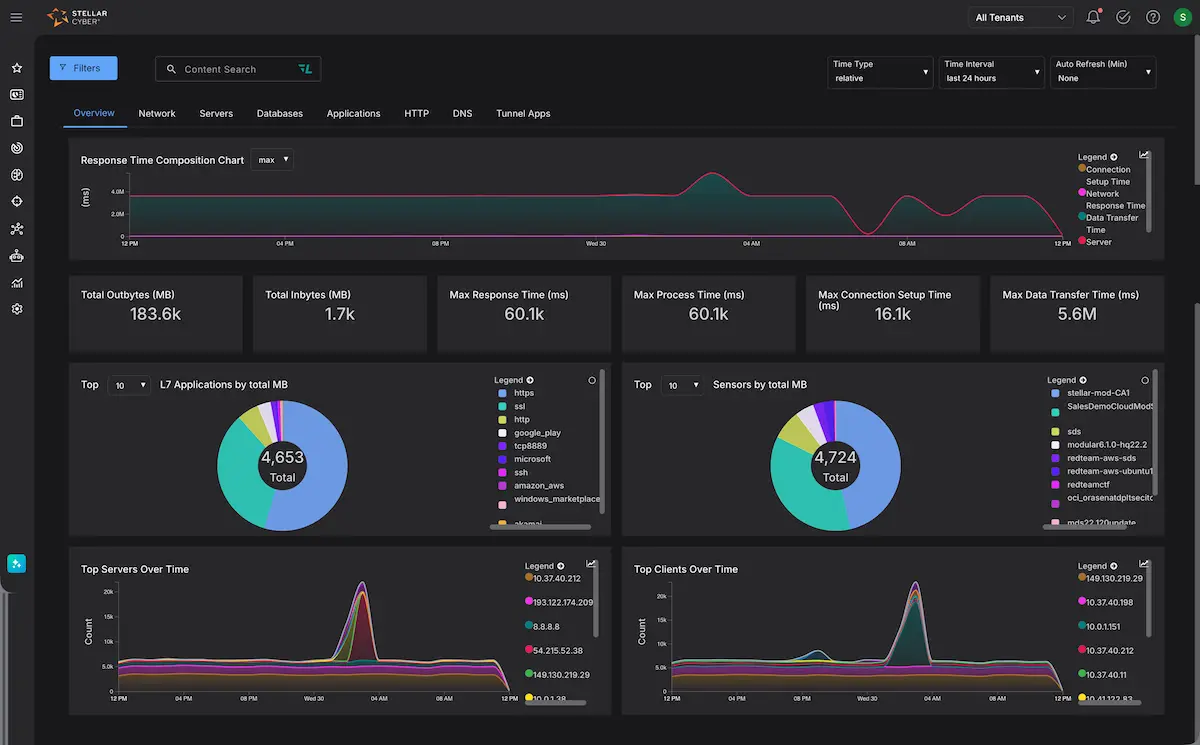
Turn signals into a shared security context
Sensors + Signals
Native physical, virtual, and cloud NDR sensors add network flow, session, protocol, and file-movement evidence to endpoint, identity, cloud, application, email, and log telemetry. This gives the platform evidence that individual tools or alert streams may not expose on their own.
Context + Cases
Stellar Cyber correlates users, assets, alerts, behaviors, threat intelligence, and network activity into a living case. GraphML exposes relationships. MITRE ATT&CK context helps show where coverage is strong, thin, or absent. Analysts and AI work from the same evidence rather than rebuilding an incident across multiple consoles.
Controls + Response
Validated findings can move into the endpoint, identity, firewall, cloud, ticketing, and workflow systems already in the environment. Human oversight remains available for consequential actions, while AI absorbs more repetitive investigation and triage work.
From a linear workflow to a continuous security loop
Traditional SOC workflows move work from tool to tool. Every handoff costs time and can strip away context.
An Integrated Security Operations Center creates a continuous loop. Detection creates evidence, then correlation adds context, investigation builds understanding while decisions drive response, and finally, outcomes improve the next investigation.
Simple automation will not suffice. The goal should be an accumulative security operation, where every step strengthens the next.
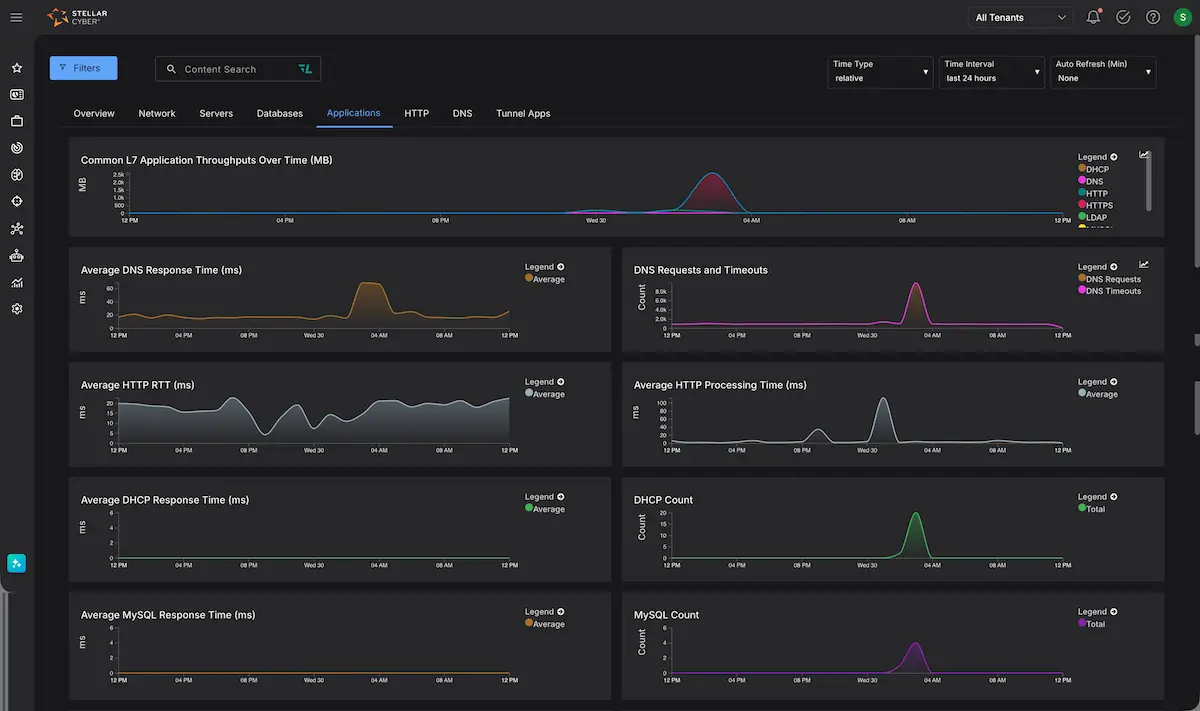
Built for lean enterprise security teams
Lean security teams need more security capacity from the people and tools they already have, not simply another console.
Stellar Cyber unifies NG-SIEM, NDR/OT, ITDR/UEBA, threat intelligence, detection, investigation, triage, case management, hunting, and response around one data and AI architecture.
The outcome is simple: fewer tools to operate, less manual correlation, less context switching, and more analyst capacity focused on decisions that matter.
Built for MSSPs and MDRs
MSSPs face the same operating problem at a different scale: too many environments, too many variations, and the same finite analyst pool.
Stellar Cyber combines native multitenancy, cross-tenant visibility, role-based controls, flexible data onboarding, and common detection and investigation workflows so providers can standardize operations while preserving each customer’s data and policy boundaries.
The goal is to scale customers and service depth without scaling operational complexity at the same rate.
Open by architecture
Integrated does not have to mean single-vendor.
Stellar Cyber works with the endpoint, identity, firewall, cloud, vulnerability, ticketing, and workflow products already in place. Existing controls can remain where they are strongest while Stellar Cyber provides the shared data, context, investigation, and orchestration that connect them.
Your tools can stay different. Your SOC does not have to operate that way.
Why this architecture matters now
The agentic era raises the stakes for security architecture. Faster agents can actually exacerbate fragmented evidence, weak governance, and disconnected response.
A durable AI SOC needs three things beneath the agent: complete enough data to reason from, a shared context that persists through the investigation, and governance that defines who or what can access data and take action.
That is the role of the full-cycle Integrated Security Operations Center.
Independent validation
IDC positioned Stellar Cyber in the Leaders category of the 2026 IDC MarketScape for Worldwide Standalone AI SOC Platforms. IDC highlighted Stellar Cyber’s native XDR and NDR foundation, common data model, threat intelligence, GraphML-based visualizations, named use cases, deployment flexibility, and fit for midsize enterprises, MSSPs, and MDR providers.
Gartner has also identified Stellar Cyber as a Sample Vendor in the Integrated Security Operations Center (ISOC) Systems category.
Make your entire security operation work as one
Microsoft’s Integrated Security Operations Center story makes an important point. People and agents work better when signals, context, and controls operate as a system.
Stellar Cyber extends that idea across the heterogeneous security environments lean enterprises and MSSPs/MDRs actually operate.
Own the security data. Preserve the context. Apply the right AI. Govern access and action. Keep the security tools that work.
One full-cycle architecture for people and AI to see, understand, and act together.