




Ukraine’s leadership rejected Elon Musk’s accusations that its military had misused Starlink’s satellite internet service to carry out offensive drone strikes, as Kyiv announced that restrictions disrupting critical military communications had been lifted. Ukrainian Defense Minister Yevhen Khmara said Saturday that Starlink and Starshield connectivity had been restored, with military monitoring systems recording stable connections […]
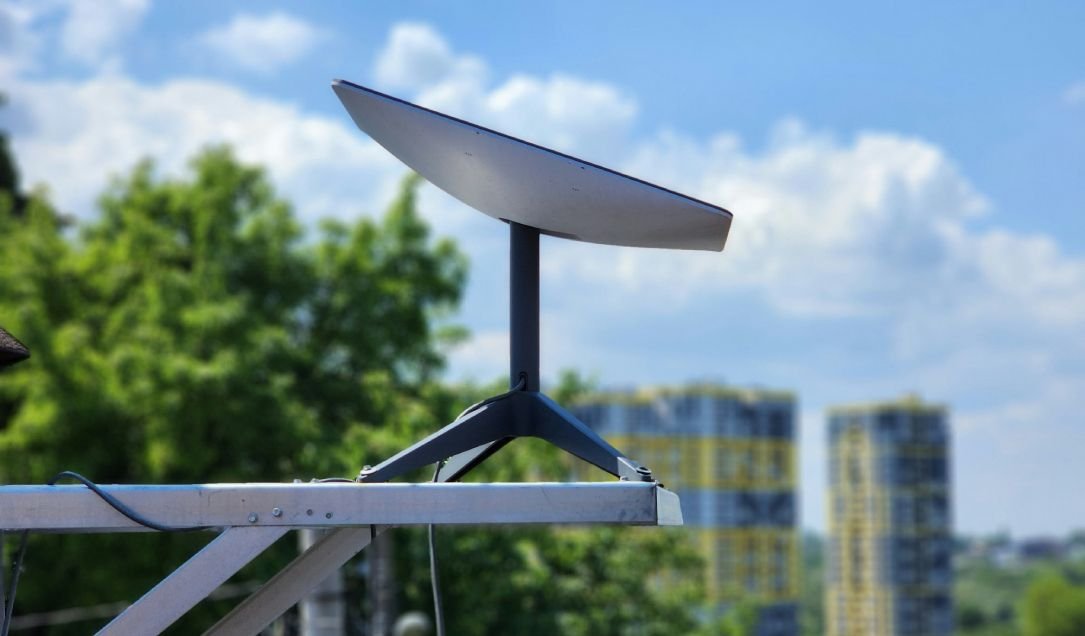
Ukraine’s leadership rejected Elon Musk’s accusations that its military had misused Starlink’s satellite internet service to carry out offensive drone strikes, as Kyiv announced that restrictions disrupting critical military communications had been lifted.
Ukrainian Defense Minister Yevhen Khmara said Saturday that Starlink and Starshield connectivity had been restored, with military monitoring systems recording stable connections on equipment exceeding 400 kilometers per hour.
The announcement followed nearly two weeks of disruptions that forced Ukrainian troops to cancel some combat missions and complicated drone operations, reconnaissance and frontline logistics.
Ukrainian President Volodymyr Zelensky confirmed Saturday that the restrictions had been lifted, saying connectivity had returned to the levels needed for military operations.
“This matters: for our frontline logistics, for defending Ukraine against jet-powered Shahed drones,” Zelensky said, thanking the United States and other partners for helping resolve the issue.
The apparent resolution came amid a public dispute between Musk and Ukrainian officials over whether Kyiv had misused the satellite service. Musk accused Ukraine’s military Saturday of using commercial Starlink terminals to conduct offensive drone strikes, which he said violated the company’s rules.
“Ukraine’s military violated Starlink terms of service and used it for offensive drone strikes to kill people,” Musk wrote on X.
He distinguished commercial Starlink from Starshield, a military-focused version of SpaceX’s satellite communications service that he said was controlled by the U.S. government.
“Starshield, a different system, is controlled by the US government. What they decide to do is up to them,” Musk said.
Ukrainian officials and military advisers disputed his claim, arguing that technical restrictions made it impossible to use commercial Starlink terminals for the drone missions Musk described.
Serhii Sternenko, a Ukrainian activist who previously advised the country’s defense minister, said a registration system introduced in February required all satellite terminals operating on moving platforms to be connected to the military Starshield service.
“Using civilian Starlink for drone missions was technically impossible,” Sternenko said, adding that Ukraine had not violated the service’s terms.
Ukrainian presidential adviser Serhii Beskrestnov, known as “Flash,” also rejected Musk’s allegations, saying commercial Starlink terminals operating in Ukraine were limited to speeds of 70 to 90 kilometers per hour and did not work on Russian territory.
Those restrictions, he said, prevented Ukrainian forces from using commercial terminals to conduct medium- or long-range drone strikes.
The Starshield restrictions, introduced without warning in mid-October, disrupted connectivity on moving vehicles and drones, causing satellite terminals to lose their connections at higher speeds.
The problems were particularly concerning for Ukraine’s efforts to intercept Russian jet-powered attack drones, which require Ukrainian interceptor drones to travel at high speeds while maintaining reliable communications.
According to a Sunday report by the Institute for the Study of War, Ukraine’s interception rate against Russian jet-powered drones declined from 77% to approximately 74% between Oct. 14 and 24, when Starshield was experiencing disruptions.
The researchers said Ukraine maintained a relatively high interception rate despite the restrictions. The figures do not establish whether the connectivity problems directly caused the decline.
It remains unclear who ordered the speed restrictions.
Musk previously said Starshield systems were owned and controlled by the U.S. government and that decisions about speed limits and permitted uses rested with the U.S. military and ultimately President Donald Trump.
The Wall Street Journal reported Friday that Trump had ordered Musk on Oct. 21 to lift the restrictions after becoming frustrated that satellite connectivity remained capped at approximately 160 kilometers per hour. Trump denied having spoken to Musk about the issue but said he might intervene if the problems persisted.
The disruption came amid worsening relations between Kyiv and Washington, including disagreements over Ukrainian strikes against Russian oil infrastructure and the Trump administration’s efforts to pursue a diesel trade agreement with Moscow.
In an interview with Piers Morgan earlier this week, Zelensky said he felt personally betrayed by Trump over the restrictions, accusing Washington of abandoning a crucial partner more than four years into Russia’s full-scale invasion.
Musk, meanwhile, defended SpaceX’s role in supporting Ukraine, saying Starlink had been essential to the country’s defense since the beginning of the invasion. He warned that Ukraine remained heavily dependent on the satellite network, claiming its frontline defenses would collapse if the service were switched off.

No previous article
No new articles

Daryna Antoniuk
is a reporter for Recorded Future News based in Ukraine. She writes about cybersecurity startups, cyberattacks in Eastern Europe and the state of the cyberwar between Ukraine and Russia. She previously was a tech reporter for Forbes Ukraine. Her work has also been published at Sifted, The Kyiv Independent and The Kyiv Post.