





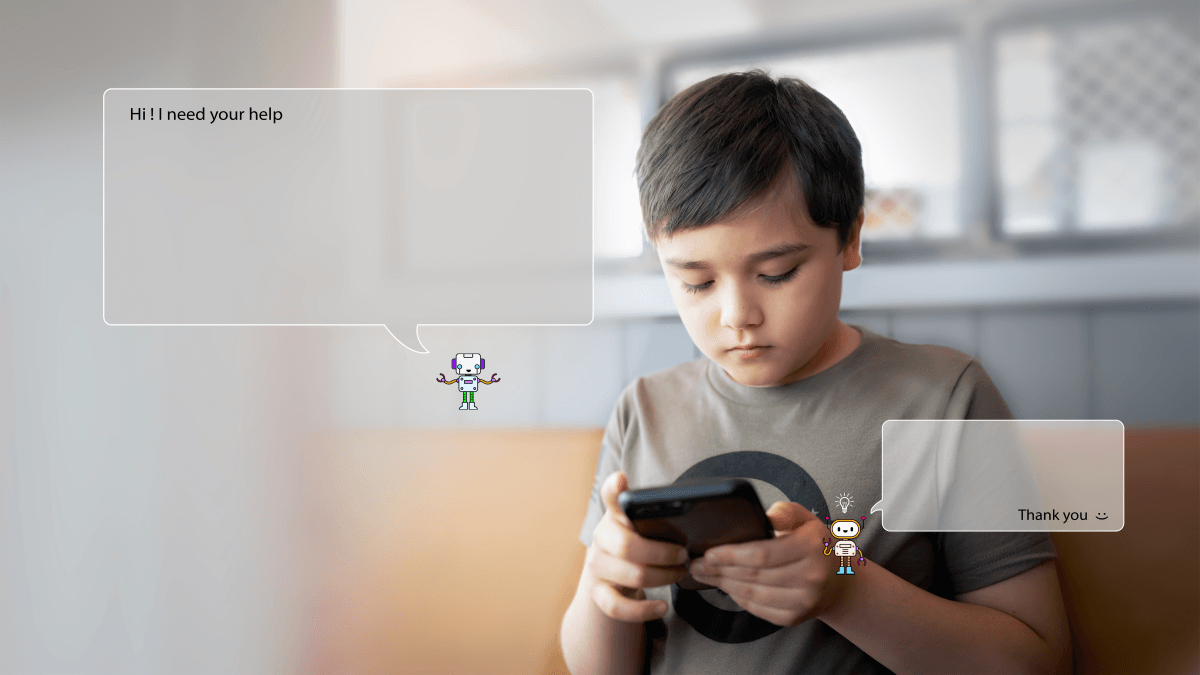
OpenAI is facing separate legal challenges over how ChatGPT interacts with children. The Guardian reports that eight US states accuse the company of misleading parents about the chatbot’s safety and exposing vulnerable users to dangerous conversations. Separately, CNET reports that a mother suing on behalf of her two children alleges that OpenAI collected and used […]
OpenAI is facing separate legal challenges over how ChatGPT interacts with children.
The Guardian reports that eight US states accuse the company of misleading parents about the chatbot’s safety and exposing vulnerable users to dangerous conversations. Separately, CNET reports that a mother suing on behalf of her two children alleges that OpenAI collected and used children’s sensitive personal information without valid parental consent.
The cases raise serious questions about what happens when children trust a chatbot with their most private thoughts, and what responsibility the company behind it has for the conversations that follow.
The accusations are serious, but we have to remember they are allegations in lawsuits, not established court findings.
Eight states challenge ChatGPT’s safety
On October 14, attorneys general from Iowa, Kansas, Nebraska, West Virginia, Arkansas, Arizona, Idaho, and Montana filed separate lawsuits against OpenAI. The coordinated action accuses the company of deceiving parents about ChatGPT’s safety and violating state consumer protection laws.
The states allege that the chatbot has been designed to be “overly agreeable and feign human compassion.” The attorneys point to examples of ChatGPT allegedly endangering vulnerable users, including children, by coaching them to commit suicide or harm others.
OpenAI says it has built age-specific protections into its products and will continue developing safeguards.
A separate lawsuit focuses on children’s private information
The day before the states filed their cases, a Hawaii mother brought a proposed class action on behalf of her 12-year-old daughter and 16-year-old son. Filed in federal court in San Francisco, the lawsuit alleges that OpenAI obtained sensitive information from children who signed up for ChatGPT without valid parental permission.
OpenAI’s terms require users under 18 to have a parent or legal guardian’s permission. But the complaint alleges that children can create accounts without OpenAI verifying that permission. It also describes a child under the service’s minimum age of 13 continuing to use the chatbot after explicitly telling it her age.
The plaintiffs allege that the company used children’s information to train its AI models without valid parental consent. They also claim that OpenAI collected information to construct personal profiles.
OpenAI disputes the claims, calling the lawsuit “misguided” and pointing to its protections for younger users.
Parental controls
OpenAI has introduced ChatGPT for Teens, with additional parental controls and alerts intended to notify linked parents in limited situations involving serious self-harm concerns. But the effectiveness of those safeguards is itself under scrutiny. Common Sense Media rated ChatGPT for Teens an “unacceptable risk” earlier this month, reporting that its testing found failures to alert parents during conversations involving suicide, self-harm, or eating disorders.
OpenAI disputes the findings and says its safety alerts cover limited situations and may not identify every concern. But for now, parental controls remain part of the dispute.
How to help keep your children safe
Parents shouldn’t have to compensate for unsafe product design. Unfortunately, we can’t treat parental controls as a safety guarantee. So here are practical steps families can take to reduce the risks:
- Explain that a chatbot is software, not a friend or therapist. A warm tone doesn’t mean it understands your child or has their best interests at heart. Set a clear boundary: Questions about mental health, self-harm, or personal safety should go to a trusted adult or qualified professional, not a chatbot.
- Talk about what your child uses AI for, without making it an interrogation. Ask them to show you the apps they use and what they like about them. Make clear that they can talk to you about any upsetting or inappropriate conversation without being blamed. If they don’t feel comfortable talking to you, help them identify another trusted adult.
- Encourage children to keep personal information out of their prompts. This includes names, school details, addresses, private photographs, and sensitive health or family information. For ChatGPT, parents with linked teen accounts can also disable model training and saved memory. While these settings reduce certain uses of their information, they are not a reason to treat a chatbot as a confidential diary.
- Watch for growing emotional reliance on AI. If you find your child increasingly turns to AI for reassurance, friendship, or emotional support, check in and help them reconnect with people they trust.
If your child mentions self-harm or suicide, take it seriously and seek human help promptly. Contact a qualified healthcare professional or crisis service. If there is immediate danger, contact local emergency services. Don’t wait for a chatbot or a parental notification to tell you to act.
Let’s face it, an incognito window can only do so much.
Breaches, dark web trading, credit fraud. Malwarebytes Identity Theft Protection monitors for all of it, alerts you fast, and comes with identity theft insurance.
About the author
Was a Microsoft MVP in consumer security for 12 years running. Can speak four languages. Smells of rich mahogany and leather-bound books.